

SERIES EIGHT
Building a structured, high-performing leadership team - without losing the culture that made it great
A case study in leadership capability, team experience, and sustainable performance.
The Context
Series Eight is a brand, design and development agency with a team of 23, navigating the dual pressures of rapid scaling and leadership maturation. Operating as a fully remote organisation across multiple countries, the company faced the added challenge of building leadership alignment, accountability, and culture without the benefit of a shared physical workspace.
As the organisation grew, the gap between what leadership intended and what the team experienced became harder to ignore, not because the culture was weak, but because the systems holding it weren't keeping pace.
In 2025, Shauna Moran partnered with Series Eight through The Leadership Systems Partnership™ to build the leadership infrastructure the team needed to grow with confidence.
WHAT LEADERSHIP FELT LIKE BEFORE
The Challenge
The leadership team at Series Eight was made up of talented leaders who were highly capable in their individual areas of expertise. However, they were largely operating in silos, without a shared leadership identity, common language, or consistent approach to leading their teams. Individually, managers were motivated and engaged. But capability without structure creates its own kind of friction.
Performance conversations were happening, but goals weren't consistently measurable. Strategy was being communicated, but the team couldn't always connect it to their day-to-day work. Leadership wanted to involve the team in decisions, but it wasn't happening consistently enough for people to feel it.
As the company grew, the co-founders remained the primary escalation point for many decisions and people-related challenges. While strong individual contributors had stepped into leadership roles, the organisation lacked the infrastructure, accountability systems, and leadership consistency required to scale effectively.
As the co-founders later described the transformation plainly: “from chaos to a structured leadership team.” That tension – between a team ready to perform and systems not yet ready to support them – was the real starting point.
THE DIAGNOSTIC MOMENT
What the 2025 audit surfaced wasn’t a culture problem. Trust was high. Relationships were strong. People cared about the work. What was missing was the connective tissue between good intentions and consistent execution.
A training programme wouldn’t fix it. A new goal setting framework alone wouldn’t either. What Series Eight needed was a structured, year-long process that built leadership capability alongside the systems to make it stick, and a way to measure whether it was landing for the team.

The Insight
The Approach
The work
The Leadership Systems Partnership™ engagement with Series Eight spanned twelve months and addressed both the human and structural dimensions of leadership. The work included:
01
A comprehensive team audit in 2025 to establish a clear baseline
02
Executive coaching and leadership capability skill development across the management team
03
Structural improvements to company systems and processes around goal setting, performance clarity, and prioritisation
04
Behavioural shifts in feedback, decisionmaking inclusion, and trust
05
A repeat audit in 2026 to measure change and surface the next layer of focus
The audit wasn’t just a measurement tool. It was a diagnostic instrument- one that made the gaps between leadership intent and team experience visible, and gave the partnership a precise place to focus.
The Outcomes
What changed
Across all measured areas, improvements ranged from 2% to 25% in twelve months. The most significant gains were in the areas that mattered most: performance clarity, team effectiveness, and empowerment.
Leadership Capability
Goal-setting & performance clarity
+25%
Team effectiveness capabilities
+18%
Decision-making inclusion
Leadership capability rating
5.0/5.0
+12.6%
Team Experience
Clarity of performance targets
Support to try new things
+17.7%
+11.6%
Involvement in decision-making
Psychological safety & trust
4.9/5.0
+12.6%
Strategic Alignment
Connecting work to company strategy
+16.8%
Sense of engagement to work
+16.8%
Clarity of team goals and direction
+16.8%
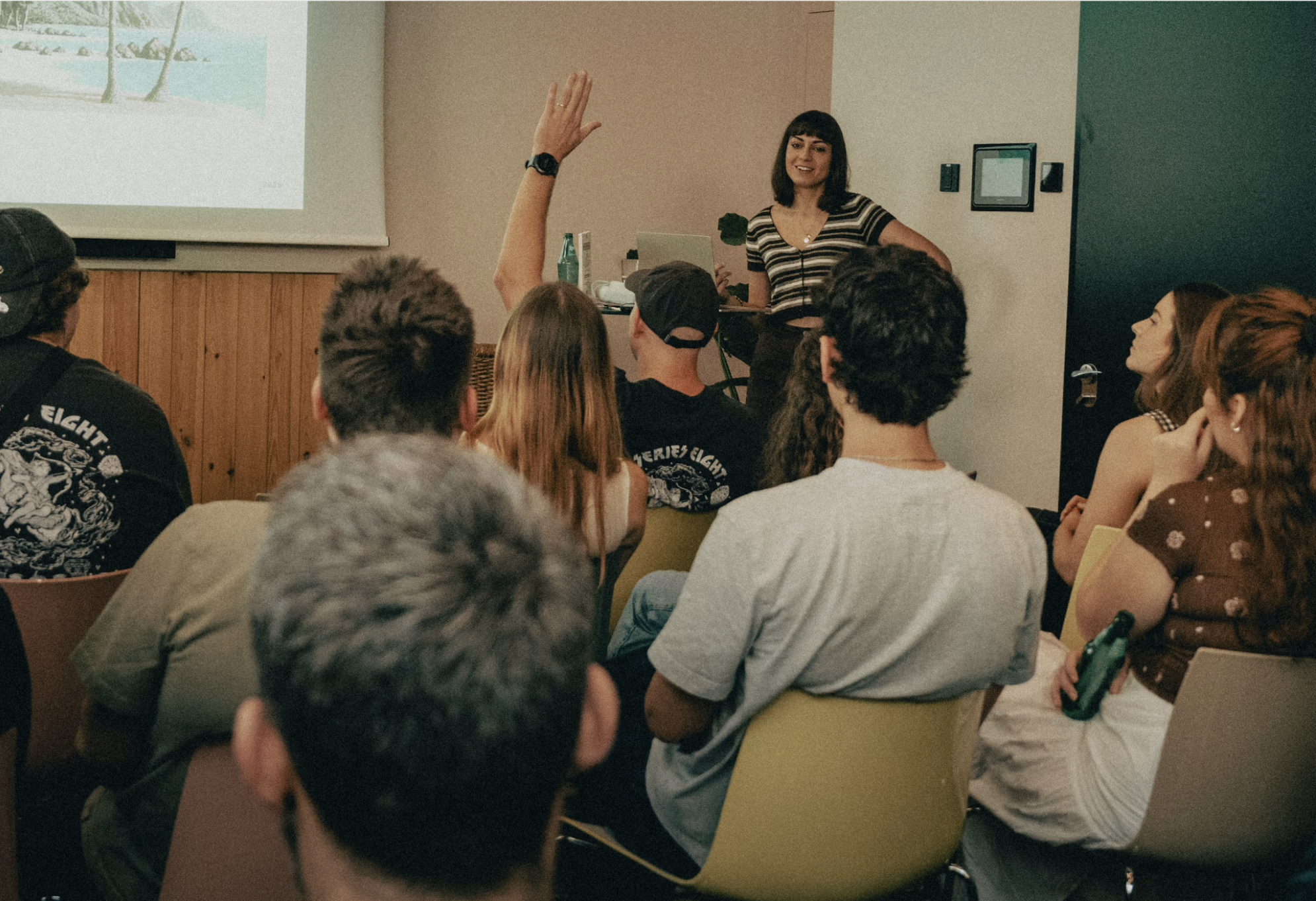
WHAT THE AUDIT MADE VISIBLE
One of the most significant outputs of the 2026 audit was the alignment analysis - a side-by-side view of how leadership perceived the team experience versus how the team actually experienced it.
In areas like performance clarity, leaders rated themselves at 5.0. The team scored the same area at 3.38. That gap isn’t a failure of leadership - it’s a structural gap.
The insight exists and the intention is there. The transmission isn’t consistent yet.
WHAT CHANGED IN PRACTICE

The numbers tell one part of the story. The shift in how leadership showed up day-to-day tells the other.
“The team has a shared language now. The coaching approach, our values, the way feedback is framed – these are things we didn't have before and that now just exist as part of how we operate.”
Fran
Co-Founder, Series Eight
IN THEIR WORDS
A Defining Moment - The Founders Lens
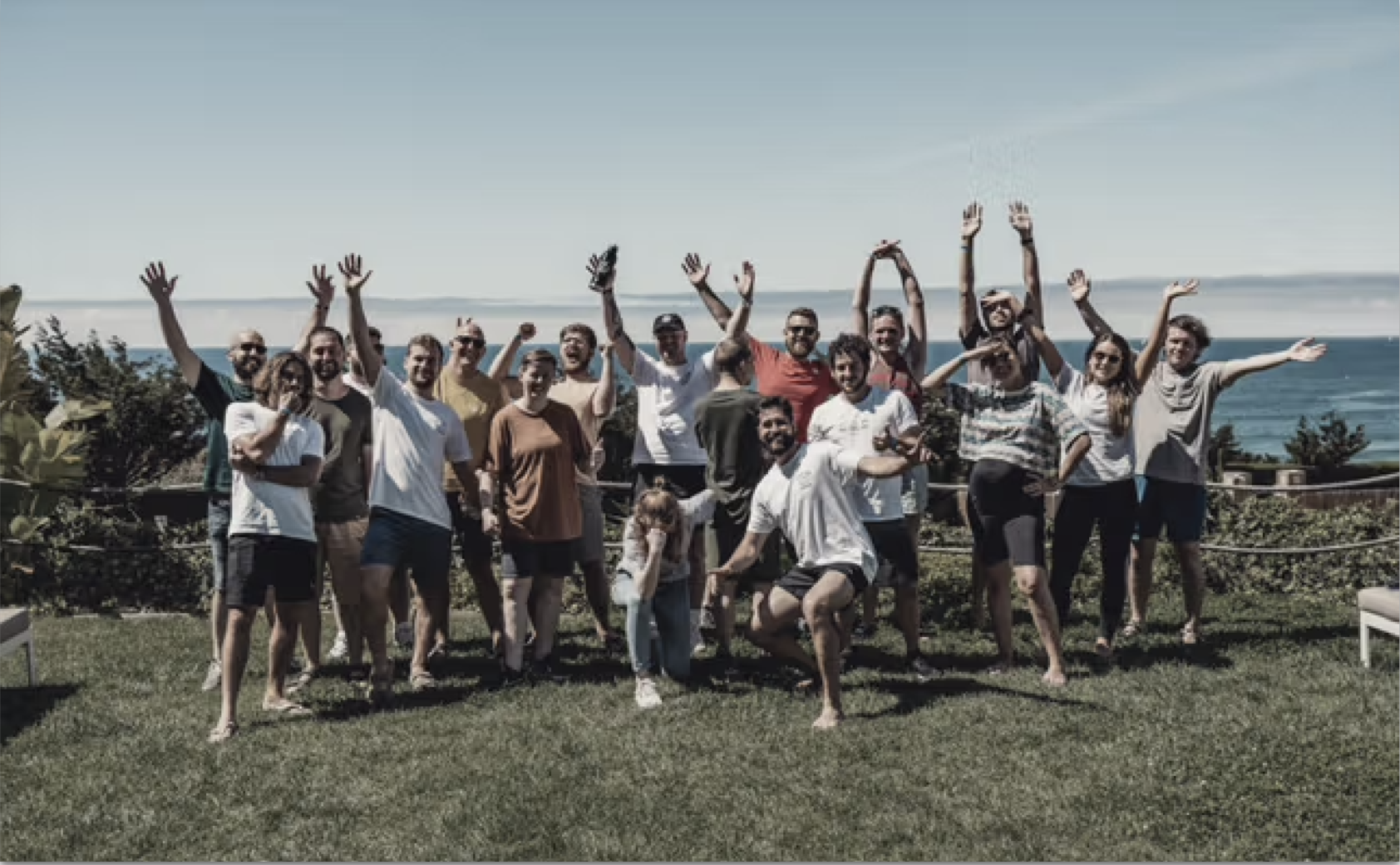
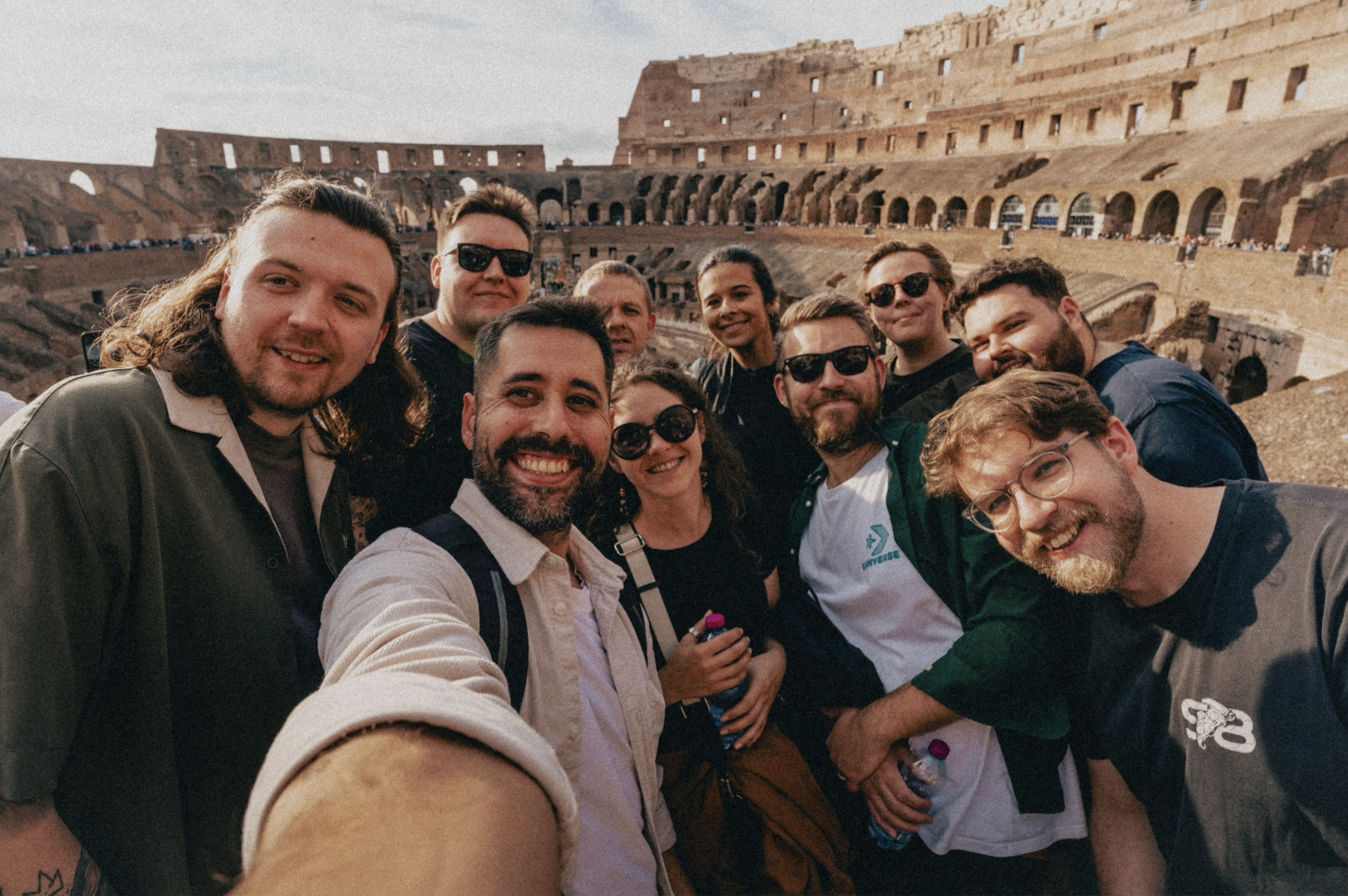
While the audit highlighted measurable improvements across leadership capability, alignment, and team experience, the shift became undeniable for the founders during the company's annual team retreat in Rome.
"It was the first time the leadership team really operated as a unit in person – working through real challenges together. That shift from a group of leads to an actual leadership team felt tangible."
— Fran, Co-Founder, Series Eight

Coaching as a Leadership Habit
Before the partnership, coaching happened reactively, without structure - in performance reviews, when something went wrong. Leaders were spending a lot of their time in trial and error. By mid-engagement, the leadership team had reframed their leadership responsibilities entirely, now equipped with the right skills, processes, tools and confidence to deal with performance or team issues.
“We didn’t really do coaching for ourselves before. Now we are.”
— Series Eight Leader
“We’re thinking more about what feedback each person needs, and how to deliver it with care.”
— Series Eight Leader
Alongside leadership capability development, Series Eight built the operational infrastructure required to support a growing leadership team. Over the course of the engagement, the organisation established clear leadership role expectations, individual coaching plans, a structured performance cycle, and more consistent approaches to feedback and development. These systems reduced reliance on the founders as the primary escalation point.
Infrastructure Built to Scale
“We've built the internal infrastructure that we should have had years ago: R&Rs for every lead, individual coaching plans, a proper performance cycle, EQ-informed conversations.”
— Co-Founder, Series Eight
“We’re no longer the only people who can read what's going on with someone and respond to it well. Decisions are being made further down the chain.”
— Co-Founder, Series Eight
Strategic Time, Reclaimed
“I’ve increased focus work by about 30% in the past two weeks, up from about 15–20%.”
— Series Eight Leader
Leaders tracked a measurable shift in how they were spending their time. In the weeks following new structures being embedded, strategic and focused work increased from approximately 15–20% of their week to between 30–60%.
Communication That Moved Faster
“All communication with team leads is a lot more collaborative. A lot more responsive.”
— Series Eight Leader
“Our leadership calls feel different now – there’s a fluency to them that wasn’t there before. People say what they actually think and we understand better how each person processes things, what they need, where they’re likely to push back and why. This way, decisions get made faster and more effectively. ”
— Co-Founder, Series Eight
Leaders tracked a measurable shift in how they were spending their time. In the weeks following new structures being embedded, strategic and focused work increased from approximately 15–20% of their week to between 30–60%.
“I’m feeling a lot more confident strategically and long-term around coaching and team progression.”
— Series Eight Leader
The leadership development didn’t just change how managers saw themselves. It changed how their teams experienced them.
Confidence That the Team Could Feel
WHY THIS MATTERS
What happened at Series Eight over twelve months isn’t a leadership training story. It’s a systems story.
High trust and strong culture were already in place. The partnership didn’t create those. It built the structural conditions – clarity, consistency, accountability, alignment – that allowed what was already good to become genuinely sustainable.
The 2026 data reflects a team that knows where it’s going, trusts the people leading it, and is ready to operate at the next level. The next phase isn’t rebuilding. It’s realising the full impact of what’s already been built.
"The ROI isn't always obvious on a spreadsheet. But the cost of not doing it—founders as the constant escalation point, leaders who feel unsupported, a team that can't scale because leadership can't—that cost is enormous and mostly invisible until it isn't. Shauna's approach creates the conditions for real conversations, but you have to be willing to have them. Give it the full commitment. The compounding happens in the second half."
— Fran, Co-Founder, Series Eight
Leadership capacity grows when the systems around it are built to hold it.